
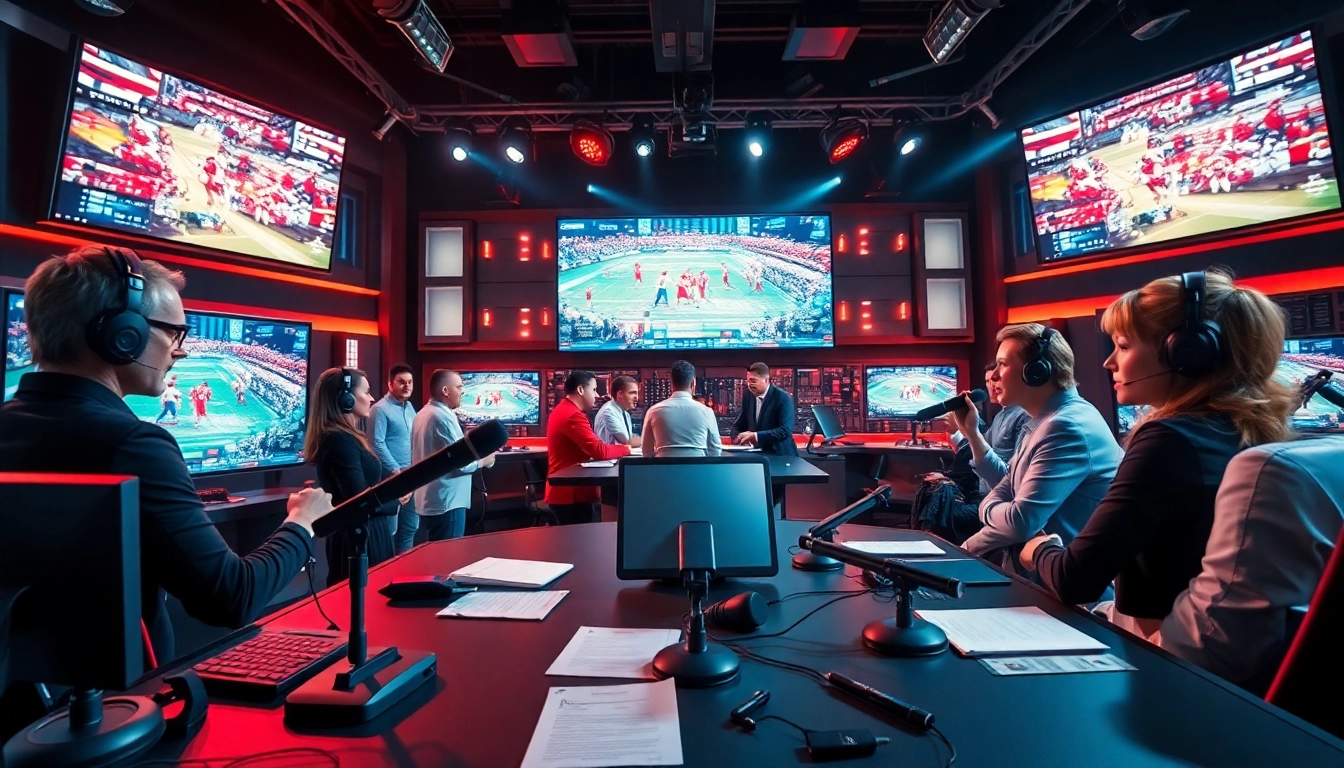
Introduction to Sports Broadcasting
Definition of Sports Broadcasting
Sports broadcasting refers to the dissemination of live or recorded sports events to an audience via various media platforms, including television, radio, and increasingly via online platforms. It encompasses a broad range of content, from live match coverage to highlight reels and analysis segments, providing fans with a plethora of ways to engage with their favorite sports. As audiences demand instant access and diverse content, the role of Sports Broadcasting has never been more critical.
History and Evolution of Sports Broadcasting
The journey of sports broadcasting began in the early 20th century with radio broadcasts, gradually evolving into television in the mid-20th century. The sophistication of technology has continuously reshaped this sector; from the introduction of color broadcasts to satellite technology that allows international events to be watched live, each advancement has broadened accessibility and viewership. In recent decades, the internet and social media have transformed sports broadcasting, allowing for not only live streaming but also user-generated content, making it interactive and engaging for fans worldwide.
Importance of Sports Broadcasting for Fans
For fans, sports broadcasting serves as a vital link to their favorite teams and athletes. It allows for not only the excitement of live events but also in-depth coverage, expert commentary, and highlight reels that keep fans connected to the action. Furthermore, broadcast platforms enable communities to come together, sharing experiences and discussions through various channels associated with Sports Broadcasting.
Technologies Shaping Sports Broadcasting
Innovative Live Streaming Solutions
The advent of high-speed internet has revolutionized live streaming capabilities, enabling viewers to watch events from virtually anywhere in real-time. Technologies like adaptive bitrate streaming and cloud-based broadcasting allow for seamless viewing experiences that adjust to the viewer’s internet capabilities. These innovations have empowered niche sports to gain exposure, as emerging platforms facilitate broadcasting for events that may not have dominated traditional networks.
Advanced Camera and Broadcasting Equipment
High-definition cameras, drones, and 360-degree cameras are just a few examples of the advanced equipment used in sports broadcasting today. These technologies enhance viewer engagement and provide unique perspectives, making audiences feel as though they are part of the event. Furthermore, remote production facilities reduce operational costs and enhance efficiency, allowing broadcasters to cover more events with a smaller team and equipment footprint.
The Role of Data Analytics in Sports Broadcasting
Data analytics plays a critical role in optimizing sports broadcasting. By analyzing viewer data, broadcasters can tailor content to viewer preferences, ensuring a higher level of engagement. Moreover, clubs are increasingly using data analytics to improve team performance, which can be shared through broadcasts, giving viewers deeper insights. Analytics not only assist in refining the broadcast experience but can also help predict viewer behavior and enhance future content strategies.
Content Creation in Sports Broadcasting
Crafting Engaging Commentary and Analysis
Effective commentary is essential in providing context and excitement to sports events. Skilled commentators can elevate the viewing experience, providing insights that enhance the narrative of the game. Engaging commentary should balance knowledgeable analysis with entertainments, ensuring that both hardcore fans and casual viewers find the broadcast enjoyable. Tips for achieving this include thorough game research, understanding team dynamics, and employing a conversational tone that resonates with the audience.
Utilizing Social Media for Broader Reach
Social media platforms serve as powerful tools for sports broadcasters to engage with fans, relay real-time updates, and amplify content reach. Platforms like Twitter, Instagram, and TikTok can be utilized for behind-the-scenes looks, expert interviews, and highlight clips that offer additional value beyond the main broadcast. Engaging via social media not only enhances visibility but also cultivates community, fostering discussions around events as they unfold.
Adapting Content for Various Audiences
Understanding the audience is crucial for effective sports broadcasting. Different demographics engage with sports content in unique ways, thus requiring tailored approaches. For example, younger audiences may prefer quick, visually engaging highlights, while older viewers might appreciate detailed analyses. Broadcasters should utilize segmentation strategies to ensure varied content styles and formats are catered to the audience’s preferences, enhancing both viewer satisfaction and loyalty.
Challenges in Sports Broadcasting
Regulatory and Licensing Issues
One of the primary challenges in the sports broadcasting landscape is navigating the regulatory environment. Laws regarding licensing, censorship, and rights can vary significantly across regions, complicating distribution strategies for broadcasters. To mitigate these challenges, it is essential for broadcasters to establish good relationships with sports leagues and governing bodies while remaining compliant with local regulations.
Maintaining Viewer Engagement
Viewer engagement is a constant challenge faced by broadcasters in a rapidly changing media landscape. With the overwhelming amount of available content, retaining viewer interest requires innovative approaches. Strategies such as interactive segments, polls, and real-time viewer engagement through apps can facilitate deeper connections. Additionally, live analytics can help broadcasters understand engagement levels during broadcasts, allowing for quick adjustments.
Addressing Technical Difficulties Live
Live broadcasting inherently includes the risk of technical difficulties, which can detract from the viewer’s experience. Proactive measures, such as thorough pre-production testing and having backup systems ready, are vital for dealing with potential issues. Moreover, employing a skilled technical team that can address problems in real-time is critical in maintaining broadcast integrity and viewer satisfaction.
Future Trends in Sports Broadcasting
The Impact of Virtual and Augmented Reality
Virtual reality (VR) and augmented reality (AR) technologies are set to shape the future of sports broadcasting significantly. VR can immerse viewers in experiences that make them feel as though they are part of the action, while AR can provide additional information layers, enhancing understanding and engagement. For instance, AR graphics can display player stats and live scores directly on the screen, creating an interactive viewing experience.
Personalization in Sports Broadcasting Experiences
Personalization is becoming more prevalent in sports broadcasting, with platforms increasingly offering viewers the ability to tailor their viewing options. This can include selecting camera angles, accessing various commentary tracks, or even choosing specific statistics to follow during a game. These customizable features are designed to enhance viewer satisfaction and engagement by delivering a more tailored sports experience.
Expanding Global Reach through Digital Platforms
The rise of digital platforms has democratized access to sports content, allowing even niche sports to reach global audiences. This expansion also enables viewers from various regions to experience events from around the world. Such accessibility not only helps broadcasters increase viewership but also opens up new revenue streams through global advertising partnerships and sponsorships.
FAQs
What is Sports Broadcasting?
Sports broadcasting is the process of transmitting live or recorded sports events to an audience via television, radio, or online platforms.
How has Sports Broadcasting evolved?
It began with radio broadcasts, transitioned to television, and now includes digital streaming and social media for wider engagement.
What technologies are involved in Sports Broadcasting?
Key technologies include broadcasting equipment, streaming platforms, data analytics, and advanced camera systems that enhance viewer experience.
What are the main challenges in Sports Broadcasting?
Challenges include regulatory issues, maintaining viewer engagement, dealing with technical difficulties, and adapting content to diverse audiences.
What trends are shaping the future of Sports Broadcasting?
Virtual reality, augmented reality, personalization, and broader access to global content are revolutionizing the industry.